Novanectar
Fueling Progress...
Fueling Progress...
Novanectar
Author
11 June 2026
Published
2 min read
Reading time
Exciting advancements in cancer care: A new injection has completely eliminated tumours in some patients, while an experimental drug has nearly doubled survival rates for advanced pancreatic cancer. Promising results from recent clinical trials bring fresh hope to patients and oncologists worldwide.
In a major boost for oncology, two significant clinical trial results announced in late May and early June 2026 are generating excitement among researchers and patients alike.
New Cancer Injection Shows Remarkable Results
A new injectable treatment has demonstrated unprecedented effectiveness in a clinical trial for head and neck cancer patients.
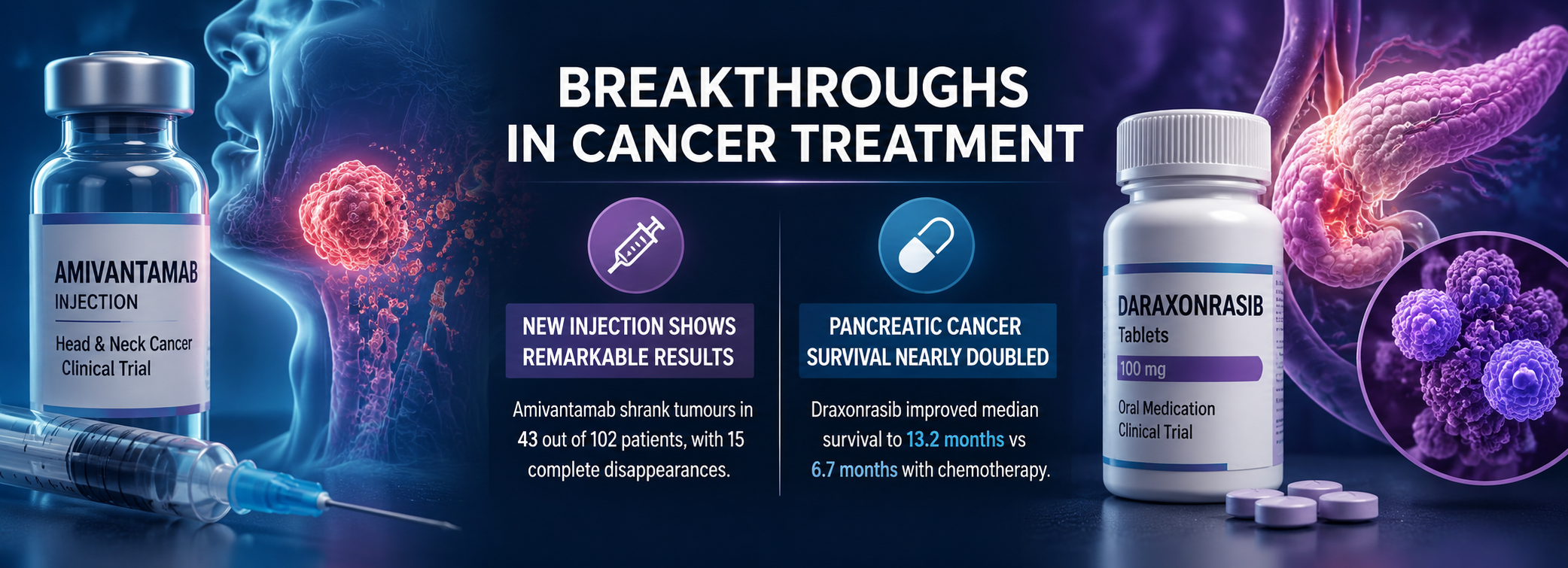
According to researchers at the Institute of Cancer Research in London, the injection (amivantamab) shrank tumours in 43 out of 102 patients. Remarkably, in 15 of those cases, the tumours disappeared completely.
The trial focused on patients whose cancer had become resistant to standard chemotherapy and immunotherapy. Experts described the responses as "unprecedentedly strong," with visible tumour reduction occurring within weeks.
Pancreatic Cancer Survival Nearly Doubled
In equally encouraging news, an experimental oral medication called daraxonrasib has nearly doubled overall survival rates for patients with advanced pancreatic cancer — one of the most aggressive and difficult-to-treat forms of the disease.
In the Phase 3 trial, patients receiving the drug lived a median of 13.2 months compared to 6.7 months for those on chemotherapy alone. The results were so impactful that they received a standing ovation when presented at a major oncology conference.
The drug targets specific mutations (particularly in the KRAS gene) that drive tumour growth, offering a more precise approach with reportedly fewer severe side effects than traditional chemotherapy.
What This Means for Patients
These breakthroughs highlight the rapid progress being made in targeted therapies and immunotherapies. While larger studies and regulatory approvals are still needed before widespread use, the early results signal a potential shift in how certain hard-to-treat cancers are managed.
Author: Novanectar
Publish Date: 11-06-2026
Published on 11 June 2026
Last updated: 11 Jun 2026