Novanectar
Fueling Progress...
Fueling Progress...
Novanectar
Author
09 April 2026
Published
4 min read
Reading time
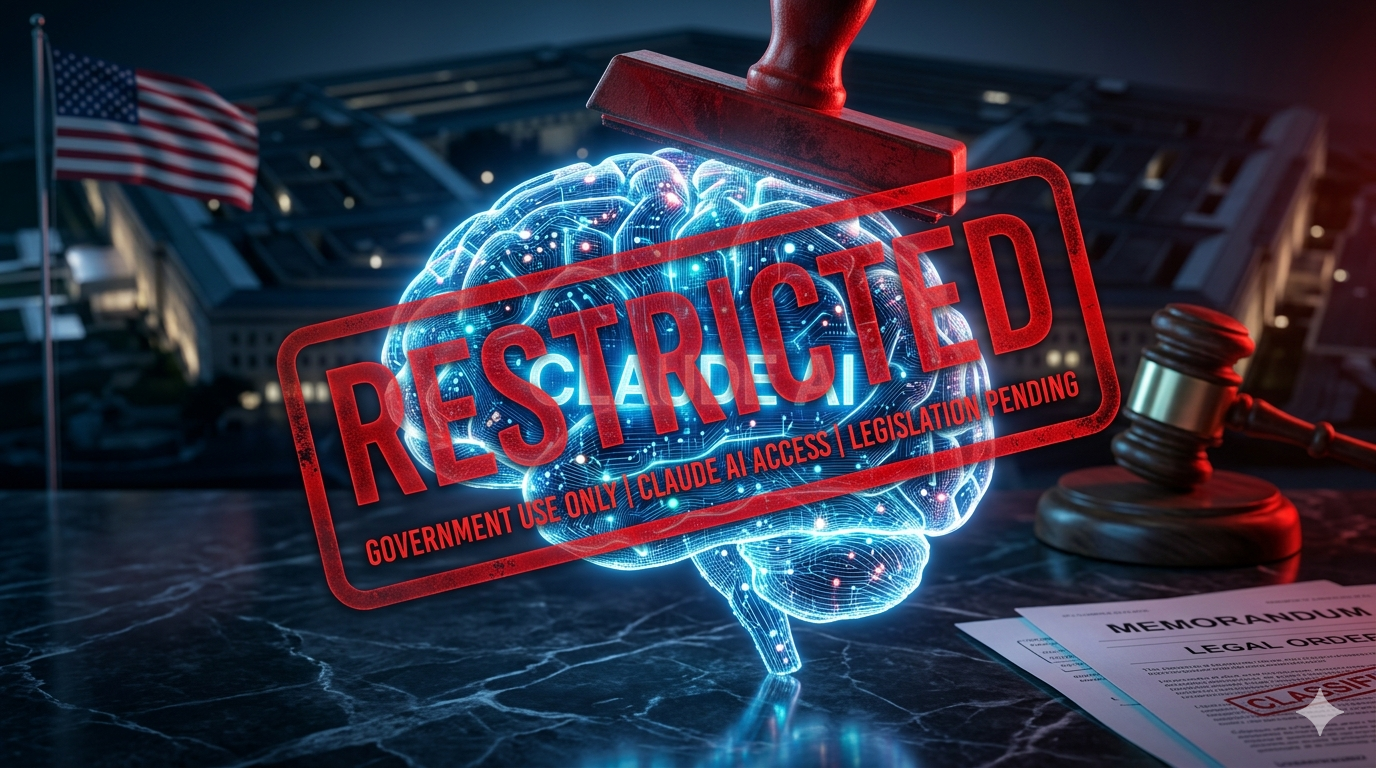
A D.C. appeals court refused to block the Pentagon's blacklisting of Anthropic. The AI firm was labeled a "security risk" after refusing to lift Claude's safety guardrails for military use. Anthropic claims retaliation, while the U.S. cites readiness. A major hearing is set for May 19, 2026.
Digital Marketing for Restaurants and other tech-reliant industries often track AI developments closely. In a major legal shift, a Washington, D.C. federal appeals court has declined to block the Pentagon's decision to blacklist the AI company Anthropic. This decision, issued on April 8, 2026, marks a significant moment in the clash between private AI ethics and national security.
This ruling directly impacts defense contractors, government-affiliated tech firms, and AI researchers. It serves as a major precedent for any US-based company providing AI services to the Department of Defense (DoD), now increasingly referred to as the "Department of War."
The Anthropic Blacklisting is a national security designation labeling the company as a "supply-chain risk." This label prevents Anthropic from securing Pentagon contracts. The government issued this designation after Anthropic refused to remove safety guardrails that prevent its Claude AI from being used for autonomous weapons or mass domestic surveillance.
Current Status: The D.C. Appeals Court denied Anthropic's emergency request to stay the blacklist while the lawsuit proceeds.
The Conflict: Anthropic refused a $200 million contract clause requiring its AI be available for "all lawful purposes," fearing use in lethal autonomous systems.
Conflicting Rulings: This decision contrasts with a California court ruling on March 26, 2026, which temporarily blocked a broader government-wide ban on the company.
Government Position: Acting Attorney General Todd Blanche stated the military requires full, unrestricted access to AI models integrated into sensitive systems.
Next Steps: The court has expedited the case, with oral arguments scheduled for May 19, 2026.
Business Uncertainty: Industry leaders warn that using "supply-chain risk" labels against US companies—a tool usually reserved for foreign adversaries like China—creates a volatile environment for innovation.
Financial Impact: Anthropic executives estimate the blacklist could lead to multiple billions of dollars in lost revenue for 2026.
Safety vs. Utility: The case forces a choice between a developer’s ethical "guardrails" and the military's demand for total operational control.
Precedent for Rivals: Competitors like OpenAI and xAI have reportedly agreed to similar government terms, leaving Anthropic as a solitary outlier in its safety stance.
A supply-chain risk designation is a legal tool aimed at protecting military infrastructure from sabotage or infiltration. In this instance, the Pentagon argues that Anthropic's safety filters could act as a form of "sabotage" by disabling critical systems during an active military conflict.
The label effectively locks Anthropic out of new Pentagon systems.
While Claude is still allowed in non-DOD projects, contractors are barred from using it for defense work.
The D.C. court ruled that while Anthropic faces financial harm, the government’s interest in managing its AI tech during active conflict carries more weight.
The ongoing battle highlights a deep rift between Silicon Valley and Washington. Experts fear that if the government forces AI companies to abandon safety ethics, it could discourage researchers and slow the development of responsible AI.
There is concern that political considerations are now driving federal procurement.
The ruling could disrupt hundreds of enterprise customers who fear "guilt by association" with a blacklisted firm.
The conflict comes at a time of heightened global tension, where the US is racing to lead in military AI.
The legal standoff between Anthropic and the US government is far from over. While the Pentagon currently maintains its blacklist, the May 19th hearing will be the decisive moment for Anthropic's future. The outcome will determine if an American company can be branded a security risk for disagreeing with government usage policies. Stay tuned for further updates as this high-stakes trial continues to reshape the future of artificial intelligence.
Published on 09 April 2026
Last updated: 09 Apr 2026